
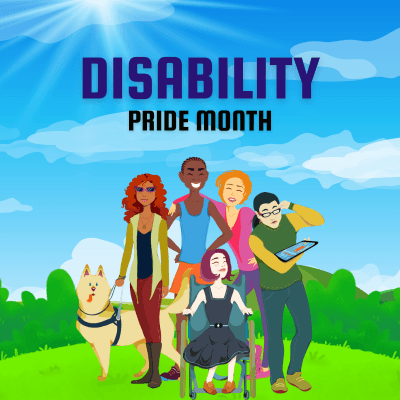
July is Disability Pride Month, a time to celebrate disability identity, culture, community, leadership, and advocacy. It is also an opportunity to examine the barriers that prevent disabled people from experiencing safety, autonomy, dignity, and full participation in their communities.
For survivors with disabilities, ableism and inaccessible systems can increase vulnerability to abuse and make it more difficult to seek support. Recognizing these intersections is an important part of building domestic violence services that are accessible, survivor-centered, and responsive to the diverse experiences of disabled people.
Understanding the Intersections of Disability and Domestic Violence
People with disabilities experience violent victimization at significantly higher rates than people without disabilities. An analysis from the Bureau of Justice Statistics found that, from 2017 through 2019, the rate of violent victimization against people with disabilities was nearly four times the rate for people without disabilities. People with disabilities represented approximately 12 percent of the population studied but experienced 26 percent of all nonfatal violent crime.
These statistics address violent victimization broadly and should not be interpreted as a current estimate of domestic violence alone. However, they illustrate the serious and disproportionate exposure to violence experienced by disabled people.
This increased risk is not caused by disability. It is connected to ableism, discrimination, social and economic inequities, isolation, inaccessible services, and systems that do not consistently recognize or respond to the needs of disabled survivors.
Abuse may also involve tactics specifically connected to a person’s disability. A person causing harm may:
- Withhold medication, food, personal care, or medical treatment
- Damage, hide, or restrict access to mobility devices, communication equipment, or assistive technology
- Refuse to provide assistance with essential daily activities
- Use a survivor’s disability to discredit them or prevent others from believing them
- Threaten institutionalization, loss of housing, or loss of services
- Control transportation, finances, benefits, or access to health care
- Interfere with communication or prevent access to interpreters
- Use a caregiving role to increase surveillance, dependency, or isolation
These tactics can make it more difficult for a survivor to identify abuse, communicate what is happening, leave an unsafe situation, or access services without the involvement of the person causing harm.
Barriers to Safety and Support
Disabled survivors are not a single or uniform group. Disability may be physical, sensory, intellectual, developmental, cognitive, psychiatric, chronic, or otherwise not immediately apparent. A person may have more than one disability, and access needs can vary based on the individual, environment, and situation.
Survivors may encounter a range of barriers when seeking assistance.
Dependence and isolation
Some people rely on partners, family members, personal care attendants, or other caregivers for support with daily activities. When the person providing assistance is also causing harm, the survivor may have limited opportunities to communicate privately, seek help, or leave.
Communication barriers
Survivors may be unable to access information or services when interpreters, plain language materials, captioning, alternative formats, augmentative communication, or other accommodations are unavailable.
Communication differences should never be mistaken for a lack of understanding, credibility, or capacity to make decisions.
Inaccessible services
Domestic violence shelters, crisis services, transportation, counseling, legal assistance, and health care settings may not be physically, digitally, communicatively, or programmatically accessible.
Accessibility involves more than ramps and doorways. It also includes policies, communication practices, technology, transportation, sensory environments, service animals, personal assistance, medication management, and the ability to provide reasonable accommodations.
Disbelief and harmful assumptions
Disabled survivors may be viewed as unreliable, confused, dependent, or incapable of making their own decisions. These assumptions can prevent survivors from being believed and can lead professionals or family members to make decisions without their participation.
Institutional and criminal legal system barriers
Survivors may encounter law enforcement officers, attorneys, courts, medical providers, or service systems that lack training in disability access and reasonable accommodations. A survivor may also be reluctant to involve a system that has previously caused harm, threatened their autonomy, or failed to meet their needs.
Disability Is Not the Barrier. Inaccessible Systems Are.
Disability Pride Month reminds us that disability is a natural and valuable part of human diversity. Disabled people bring knowledge, creativity, culture, leadership, and lived expertise to every community.
The challenge is not the existence of disability. The challenge is the attitudes, policies, environments, and systems that restrict access to safety, choice, and participation.
Survivors with disabilities deserve:
- Full autonomy and meaningful participation in decisions affecting their lives
- Accessible and affirming domestic violence services
- Information in formats they can understand and use
- Communication access throughout the service process
- Safety planning that reflects their disability related needs and circumstances
- Advocates who understand both domestic violence and disability justice
- Services that recognize interdependence without treating it as weakness or incapacity
- Opportunities to define safety, healing, accountability, and justice for themselves
Strengthening Accessibility in Domestic Violence Services
Accessibility should not begin only after a survivor requests an accommodation. Programs can prepare in advance by regularly examining their facilities, communications, policies, partnerships, and service practices.
Advocates and organizations can take meaningful action by:
- Asking every survivor about access needs rather than making assumptions based on appearance or diagnosis
- Providing multiple ways to communicate with the program
- Offering information in plain language and accessible digital and print formats
- Ensuring websites, registration forms, videos, and virtual services meet accessibility standards
- Budgeting for qualified interpreters, captioning, transportation, and other accommodations
- Developing policies related to service animals, personal care attendants, assistive devices, and medication access
- Including disability access in emergency and shelter planning
- Training staff to recognize disability related abuse tactics
- Avoiding unnecessary questions about a person’s diagnosis when the focus should be on the accommodation they need
- Establishing partnerships with disability led organizations and Centers for Independent Living
- Compensating disabled people for their expertise when they advise, train, or evaluate programs
- Including disabled survivors in program development and organizational decision-making
Accessibility is an ongoing responsibility. Programs should create regular opportunities for disabled people to identify barriers and help shape solutions.
Resources for Survivors
Disability Rights New York
Disability Rights New York is New York State’s designated protection and advocacy system. It provides advocacy and legal assistance related to the rights of people with disabilities.
Learn more or contact Disability Rights New York
Telephone: 518-432-7861
Toll free: 800-993-8982
National Domestic Violence Hotline
The National Domestic Violence Hotline provides free and confidential support, safety planning, information, and referrals 24 hours a day.
Contact the National Domestic Violence Hotline
Call 800-799-7233.
Text START to 88788.
Live chat is available through the website.
The Deaf Hotline
The Deaf Hotline provides free, confidential, 24-hour support in American Sign Language for Deaf, DeafBlind, and hard-of-hearing survivors experiencing abuse.
Video phone: 855-812-1001
Center for Independence of the Disabled, New York
The Center for Independence of the Disabled, New York, is a disability led organization serving people with disabilities across New York City. CIDNY provides benefits counseling, advocacy, peer support, transition services, and other resources that support independent living.
Learn more about CIDNY’s services
Telephone: 212-674-2300 or 646-442-1520
New York State Domestic Violence and Sexual Violence Hotline
The New York State Domestic Violence and Sexual Violence Hotline provides confidential assistance and connections to local services.
Chat with an advocate or find additional information
Call 800-942-6906.
Text 844-997-2121.
If you are in immediate danger or need emergency medical assistance, call 911.
Resources for Advocates and Organizations
End Abuse of People with Disabilities
End Abuse of People with Disabilities works across the disability and anti-violence movements to prevent violence against people with disabilities and Deaf people. Its resource library includes tools, training materials, assessments, and guidance for organizations working to improve accessibility and their responses to survivors.
Explore the End Abuse resource library
Just Ask Toolkit
The Just Ask Toolkit helps advocates, attorneys, law enforcement professionals, and other service providers discuss and respond to accommodation needs. It includes practical steps and sample language for asking survivors what they need to participate fully in services.
Find the Just Ask Toolkit and related resources
Deaf and Hard of Hearing Resources
End Abuse of People with Disabilities offers information about the barriers experienced by Deaf survivors and guidance for developing culturally responsive language access practices.
Explore resources for serving Deaf and hard-of-hearing survivors
Disability Related Power and Control Resources
The National Center on Domestic and Sexual Violence maintains adapted power and control wheels addressing abuse involving people with disabilities, caregivers, mental health systems, and other circumstances.
View adapted power and control wheels
Spotlight on Barrier Free Living: Breaking Barriers and Building Safety
During Disability Pride Month, NYSCADV is proud to recognize the work of Barrier Free Living, a New York City organization supporting survivors with disabilities.
Barrier Free Living works to ensure that people with disabilities can live free from violence, abuse, and bias. Its programs serve survivors with a range of disabilities and provide accessible shelter, counseling, safety planning, advocacy, housing, and community-based support.
Barrier Free Living’s programs include:
Freedom House
Freedom House is a fully accessible emergency domestic violence shelter serving individuals and families with and without disabilities. Services include counseling, support groups, advocacy, and safety planning.
Secret Garden
Secret Garden provides counseling, support groups, safety planning, and advocacy for survivors of domestic violence with disabilities.
BFL Apartments
BFL Apartments provides permanent housing and on-site supportive services for survivors of domestic violence with disabilities and veterans with disabilities.
Freedom Village
Freedom Village provides accessible supportive housing and services for survivors with disabilities and older adults.
Barrier Free Living’s approach recognizes that survivors are the experts in their own lives. Its work supports survivors in identifying their needs, making informed choices, reclaiming autonomy, and pursuing safety and healing in ways that are meaningful to them.
Learn more about Barrier Free Living and view its mission film
We All Deserve Safety, Dignity, Access, and Celebration
Disability Pride Month is about identity, visibility, culture, community, and collective power. It is also an opportunity to recommit ourselves to removing the barriers that prevent disabled survivors from accessing safety, support, justice, and healing.
Creating accessible services is not an optional addition to domestic violence advocacy. It is a fundamental part of survivor-centered practice.
As we celebrate the resilience, knowledge, and leadership of disabled people, we must also ensure that our organizations, programs, communications, and policies reflect the full diversity of the communities we serve.
This blog post aligns with the goals and requirements of the Family Violence Prevention and Services Act, or FVPSA, which supports efforts to prevent family violence, domestic violence, and dating violence and to provide immediate shelter and supportive services for survivors. As outlined in FVPSA, funded programs are intended to “prevent incidents of family violence, domestic violence, and dating violence, and provide immediate shelter and supportive services for victims of such violence, and for their dependents.”
Sharing public awareness information about the intersections of disability and domestic violence supports these goals by helping advocates, service providers, and communities recognize disability related abuse tactics, address barriers to safety, and improve access to shelter and supportive services. This includes advancing accessible, culturally responsive, community-based approaches that center the needs, choices, dignity, and leadership of underserved survivors, including survivors with disabilities and Deaf survivors.